
The Real Price of a Cheap, Non-Compliant Window
Recent testing has put imported aluminium windows and doors under serious scrutiny. Independent labs simulating Australian storm conditions found the majority of tested units failed to meet minimum Australian Building Code requirements. Frames collapsed. Water poured through seals. One panel weighing over 100 kilograms dislodged entirely from its frame. The standard those units failed to meet is AS2047.
These aren’t technicalities. They are safety failures.
What does AS2047 actually test?
AS2047 is the mandatory standard for windows and external glazed doors used in Australian buildings. It covers four core areas:

Structural Deflection
Withstanding extreme positive and negative wind pressures without warping or failing.

Water Penetration Resistance
Keeping storms out through the frame and sub-sill drainage, tested under simulated heavy rain and wind.
Air Infiltration
Checking the quality of compression seals to ensure energy efficiency and acoustic performance last over time.

Ultimate Strength
Pushing the system beyond normal use to find its true breaking point, tested to guarantee occupant safety.
A window can carry AS1288 certified glass and still fail AS2047. This is where a lot of confusion, and a lot of risk, comes from. AS1288 only covers the glass itself: its strength, its safety in the event of breakage, where it can be used. It says nothing about how that glass performs once it is sitting in a frame. The frame, hardware, and glazing have to be tested together, as one complete unit, under the same conditions the finished product will actually face. Partial compliance is not compliance, no matter how it is presented on a spec sheet.
The Trap With Unverified Imports
The pattern showing up in recent testing is consistent: glass that meets one standard, paired with a frame and assembly that has never been tested as a complete system. On paper it looks compliant. Under simulated storm conditions, it fails.
For builders, that risk sits with the project. A failed window is a warranty claim, a safety incident, or a compliance dispute waiting to happen. The good news is that this trap is easy to avoid, provided you know what to ask before the order is placed.
What to Ask a Supplier
Is the fully assembled unit AS2047 tested, not just the glass?
Can documentation be provided, as evidence of this testing?
Is the product manufactured with local conditions in mind?
If a supplier cannot answer these clearly, the answer is no.
Built and Tested for Canberra
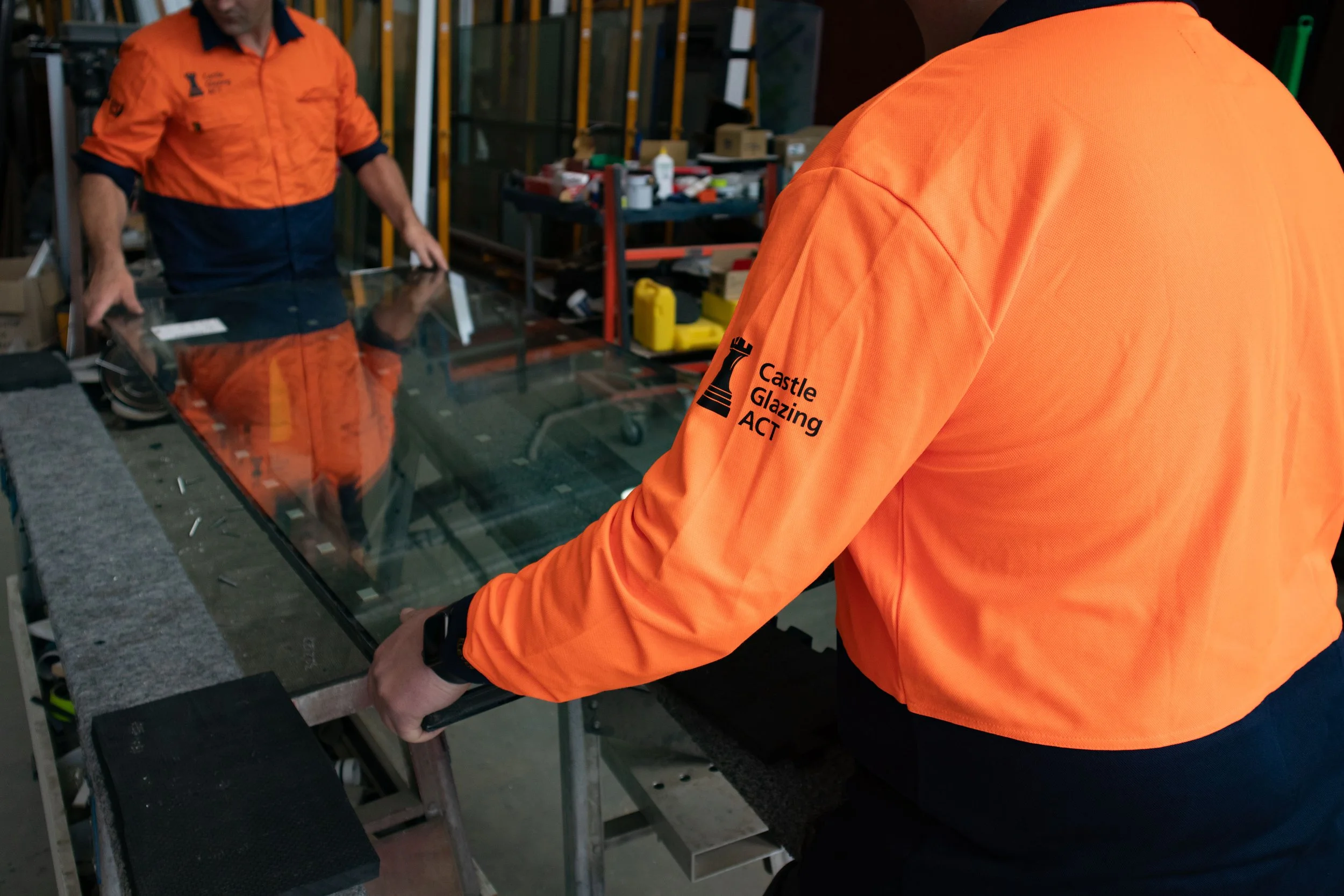
Castle Glazing ACT only works with suppliers who can produce genuine AS2047 documentation, not just a verbal assurance. Before any product reaches a project, we ask the same questions builders should be asking themselves: has the full assembly been tested, is the paperwork available to back it up, and does the design account for the conditions it will actually face. Every unit is then manufactured at our Fyshwick facility, built for Canberra conditions, so what arrives on site is what was actually tested, not a variation on it.
