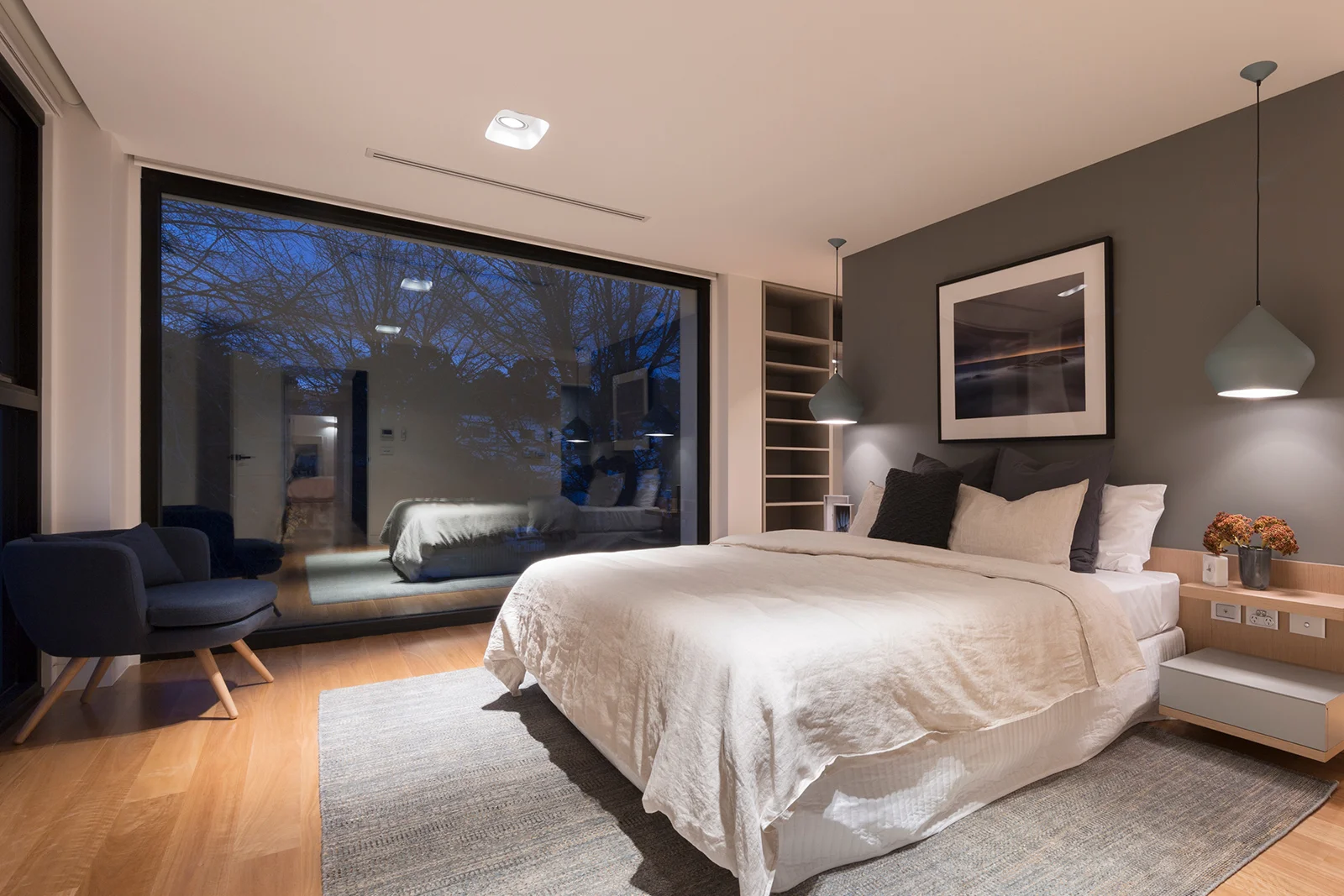

Large-format windows are a defining feature of many architecturally designed homes. Floor-to-ceiling glazing, expansive sliding doors and oversized windows bring natural light into a space, create a sense of openness and connect indoor living areas with the outdoors.
However, larger expanses of glass require careful consideration of thermal performance. During Canberra's summer months, windows exposed to strong direct sunlight can allow significant solar heat into the home, increasing indoor temperatures and affecting comfort.
The challenge is to enjoy the benefits of expansive glazing while managing unwanted heat.
Understanding Solar Heat Gain
Solar heat gain refers to the amount of heat from the sun that passes through glass and enters a building. When sunlight reaches a window, some of that energy travels through the glass and contributes to the temperature inside.
The amount of heat entering depends on several factors, including the size of the glazed area, its exposure to direct sunlight and the type of glass selected.
In homes with large expanses of glazing, glass selection becomes particularly important. A greater glazed area means more opportunity for solar heat to enter, making the glass a key consideration in the home's overall thermal performance.
Why Glass Selection Matters
The type of glass selected influences how much solar heat passes through a window and how much natural light enters the space.
Low-emissivity (Low-E) glass features a specialised coating that helps manage heat transfer. Depending on the product selected, it can reduce unwanted solar heat while maintaining natural light.
For homes with expansive glazing, Low-E glass is worth considering. The right specification will depend on the home's design and performance requirements. The glass specification, framing, seals, fabrication and installation all contribute to the thermal performance of the finished window.
Getting the balance right year-round
While managing summer heat is important, glazing also influences how a home performs during Canberra's colder months.
Large windows can bring natural light and useful solar warmth into living spaces, depending on the glass specification and conditions. The right glazing can also help manage heat transfer, supporting a more comfortable indoor environment throughout the year.
The aim is to select glass that considers both summer and winter conditions, rather than focusing on one season alone.
When planning a home with large-format windows, glass selection, framing and installation should all be considered together. The larger the glazed area, the more important it becomes to get the specification right.
At Castle Glazing, each window and door is fabricated locally in Fyshwick, with the glass, framing and finished product considered as part of the overall solution. Involving Castle early in the design process allows these decisions to be considered alongside the home's architectural and performance requirements.